

Click each part of Medicare to learn more.
Original Medicare
-
 Learn More
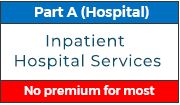
Part A (hospital)
In general, Part A covers (allows):- inpatient hospital care
- skilled nursing facility care
- nursing home care (in certain situations)
- hospice care
- home health services
-
 Learn More
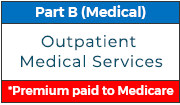
Part B (Medical)
Part B covers medically necessary services and preventive services on an outpatient basis. This includes, but is not limited to…- visits to your primary care doctor or a specialist
- medical treatments and tests
- laboratory testing
- durable medical equipment (DME)
- outpatient surgery
- outpatient prescription drugs (in limited situations)
- mental health services
- ambulance services

Learn More
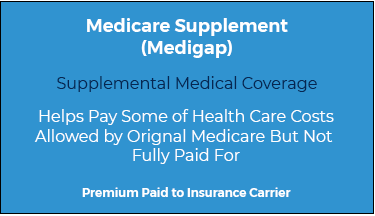
Medigap
Medigap health insurance plans are used to help pay for some of the healthcare services covered/allowed by Medicare but not fully paid for. In other words, it helps fill some of the gaps of Original Medicare coverage.
There are several Medigap plans to choose from. Unfortunately, the plans are lettered, so it can be confusing when you see Medigap plans with the same plan letter as the parts of Medicare we have summarized above.
To see all the Medigap plans offered, go to our What is a Medicare Supplement (Medigap) plan page.
There are several Medigap plans to choose from. Unfortunately, the plans are lettered, so it can be confusing when you see Medigap plans with the same plan letter as the parts of Medicare we have summarized above.
To see all the Medigap plans offered, go to our What is a Medicare Supplement (Medigap) plan page.

Learn More
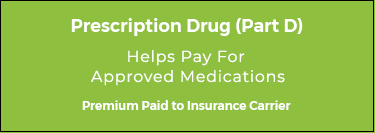
Part D (prescription drug)
Medicare Part D plans were first made available in 2006. They provide coverage for prescription drugs purchased in a pharmacy setting (or via mail order). A Part D prescription drug plan does not pay for 100% of your prescription costs, rather it pays a portion (if the drug is on the Part D prescription drug plan’s formulary). A cost-share is involved, so you will still owe a copay when picking up your prescriptions.
Coverage and drug copays are primarily based on a drug’s tier (usually Tiers 1 through 5). A drug in a lower tier will generally cost less than a higher tier drug.
To see all the details on how Part D coverage works, go to our Part D Drug Phases page.
Coverage and drug copays are primarily based on a drug’s tier (usually Tiers 1 through 5). A drug in a lower tier will generally cost less than a higher tier drug.
To see all the details on how Part D coverage works, go to our Part D Drug Phases page.

or
Medicare Advantage
-
Learn More
Part A (hospital)
In general, Part A covers (allows):- inpatient hospital care
- skilled nursing facility care
- nursing home care (in certain situations)
- hospice care
- home health services
-
Learn More
Part B (Medical)
Part B covers medically necessary services and preventive services on an outpatient basis. This includes, but is not limited to…- visits to your primary care doctor or a specialist
- medical treatments and tests
- laboratory testing
- durable medical equipment (DME)
- outpatient surgery
- outpatient prescription drugs (in limited situations)
- mental health services
- ambulance services


Learn More
Part C (Medicare Advantage)
Part C is another name for what most people call a Medicare Advantage Plan. Rather than running medical claims through Medicare first and then a Medigap (Medicare Supplement) plan…and then purchasing a stand-alone Part D prescription drug plan, you would use the Medicare Advantage plan to file all medical and prescription drug claims. You don’t need your Original Medicare card in this case (just file it away in a safe place).
Part C (Medicare Advantage) plans typically combine Parts A, B and D in one plan…though, some Medicare Advantage plans are available without Part D prescription drug coverage (i.e. when you already have creditable prescription drug coverage through another source, such as the VA).
Part C (Medicare Advantage) plans typically combine Parts A, B and D in one plan…though, some Medicare Advantage plans are available without Part D prescription drug coverage (i.e. when you already have creditable prescription drug coverage through another source, such as the VA).


